TL2 vs TL3 vs TL4 Crash Barrier Ratings Explained | Ingal Civil
TL2 vs TL3 vs TL4 Crash Barrier Ratings Explained | Ingal Civil
Road safety barriers are only effective if they perform as intended during a real vehicle impact, which is why every barrier system is crash tested before it can be used on Australian roads. A crash barrier rating tells engineers and road authorities how a barrier is expected to perform under a specific speed, vehicle weight and impact angle. In Australia, this testing is carried out under MASH, the Manual for Assessing Safety Hardware, as referenced in AS/NZS 3845.1:2015. For a closer look at what MASH compliance involves, see our guide to what MASH compliance means. MASH covers six test levels in total, TL1 through TL6, but this article focuses on TL2, TL3 and TL4, the ratings most commonly specified across modern highway and arterial road infrastructure.
What Are Crash Barrier Ratings and Why Do They Matter?
A crash barrier rating represents the level of impact a barrier system has been proven to safely contain and redirect. To earn a rating, a barrier is subjected to full scale crash tests that vary vehicle weight, impact speed and impact angle to simulate real world collision scenarios. Testing also measures occupant risk factors, including how much force is transferred to a vehicle's occupants during impact. A correctly rated barrier reduces the severity of a crash by keeping vehicles on the roadway, preventing them from crossing into oncoming traffic on a median, or stopping them from striking a fixed roadside hazard. Selecting a barrier with the wrong rating for its environment can leave a critical gap in roadside protection.
Understanding MASH Barrier Standards
MASH is the current standard used to test and assess road safety barriers, guardrail terminals and crash cushions. It replaced the earlier NCHRP 350 standard and is now widely referenced across Australia, New Zealand and North America. Under AS/NZS 3845.1:2015, MASH has been adopted as the primary crash testing standard for longitudinal barrier systems in Australia. The standard sets out six test levels, TL1 to TL6, each representing a different combination of traffic speed, vehicle type and vehicle weight.
Overview of MASH Test Levels (TL1–TL6)
TL1 and TL2 are generally applied to lower speed environments such as work zones, local streets and collector roads. TL3 is the benchmark for high speed arterial roads and is the most widely used rating for highway guardrail. TL4, TL5 and TL6 step up in severity to account for heavier vehicles, including single unit trucks, vans and tankers, and are applied where freight or heavy vehicle traffic is present. Most guardrail systems on Australian highways sit within the TL3 and TL4 range, which is why this article focuses on TL2 through TL4.
What Is a TL2 Crash Barrier?
TL2 barriers are designed for lower speed road environments, typically local and collector roads with posted speeds around 70km/h or under. Testing at this level uses a small passenger car and a heavier pickup style vehicle impacting the barrier at a moderate speed and angle. TL2 systems offer solid containment for lighter vehicles at lower speeds but are not intended for high speed arterial or highway conditions, where a higher rated barrier is required. Ingal Civil's ET SS end terminal is available in a MASH TL2 configuration, and ArmorZone MASH, a water filled temporary barrier used in construction zones, is also rated to MASH TL2, both suited to the 70km/h speed environment this rating covers.
What Is a TL3 Crash Barrier?
TL3 is the most common crash barrier rating specified for highway guardrail and roadside barrier systems in Australia. Testing is carried out at highway speeds, using the same passenger car and pickup truck test vehicles used at TL2 but at a significantly higher impact speed. TL3 barriers are widely specified on highways, arterial roads and other higher speed environments to prevent vehicles from leaving the carriageway or crossing into a median. Ingal Civil's Ezy-Guard 4, a W-Beam guardrail system built around a Z-Post design, and the ET SS end terminal are both available in TL3 configurations.
What Is a TL4 Crash Barrier?
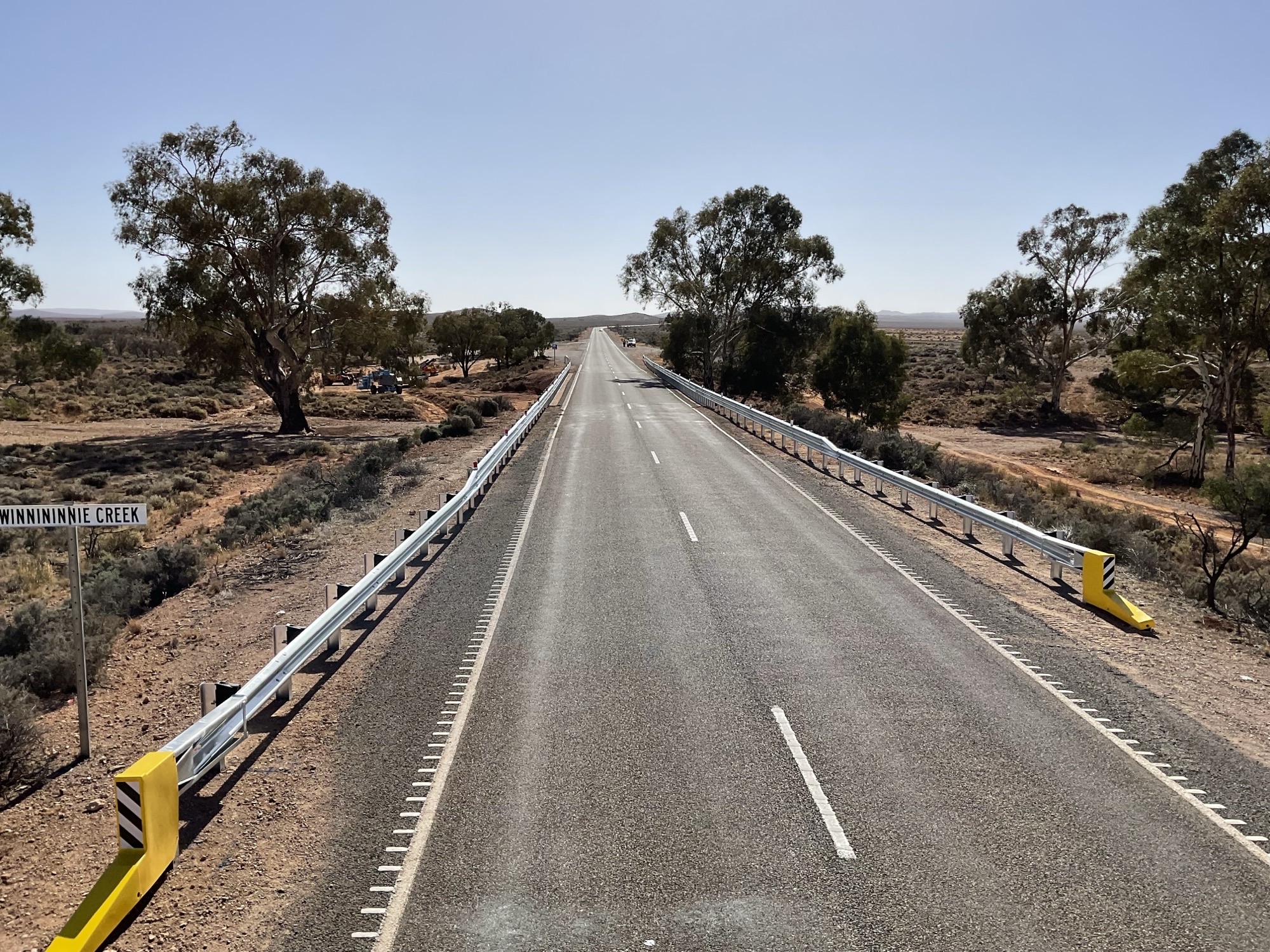
TL4 barriers are built for environments with a higher risk profile, including routes carrying regular heavy vehicle traffic. In addition to the passenger car and pickup truck tests used at TL3, TL4 testing includes an impact from a single unit truck, requiring a stronger, more rigid barrier system to safely contain and redirect a much heavier vehicle. TL4 rated barriers are commonly specified on freight routes, bridge approaches and other high risk roadside locations where a heavy vehicle impact is a realistic scenario. Ingal Civil offers several MASH TL4 compliant options for these environments. Ezy-Guard HC is a Thrie-Beam guardrail system built for high containment applications, while HighwayGuard, a steel barrier available in a low deflection system configuration, is compliant with MASH TL4 for both temporary and permanent applications.
Choosing the Right Crash Barrier Rating for a Project
Selecting the correct crash barrier rating depends on a combination of factors, including posted traffic speed, the mix of vehicles using the road, road geometry and the roadside hazards being protected against. Engineers typically determine the required rating during the design phase of a new road or as part of a safety upgrade to existing infrastructure. TL3 and TL4 barriers are the most common choice for major road infrastructure, particularly on higher speed roads and routes where preventing a cross median crash or protecting against a heavy vehicle impact is a priority.
Why MASH Compliance Is Important for Modern Road Safety Barriers
Specifying a MASH compliant barrier system means the product has been independently crash tested against current, internationally recognised criteria rather than superseded standards. This gives engineers, contractors and road authorities confidence that a barrier will perform consistently in a real world impact and helps ensure infrastructure meets the requirements set out under AS/NZS 3845.1:2015. Understanding how TL2, TL3 and TL4 ratings differ is a practical first step toward specifying the right barrier system and delivering safer outcomes for road users.