Wire Rope New Zealand
Wire Rope New Zealand
-
What is a wire rope barrier?View
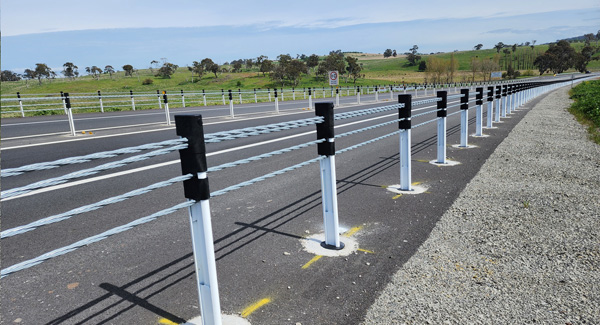
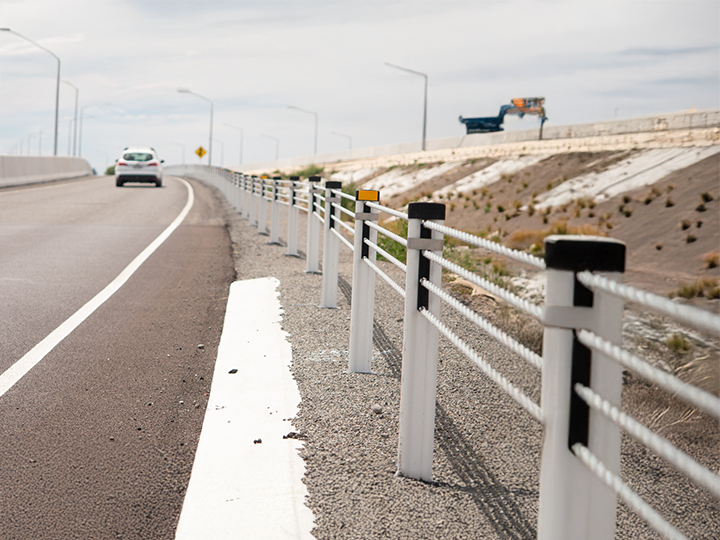
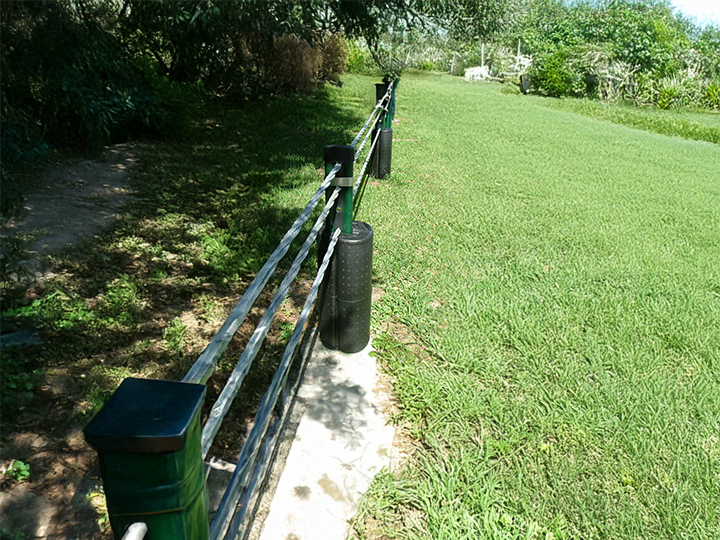
Wire rope is a flexible longitudinal barrier system comprising steel wire ropes strung through slotted posts and anchored at each end. On impact the posts yield by bending near ground level while the ropes stretch elastically, dissipating energy through both post deformation and rope elongation.
-
What is the difference between a wire rope barrier and a guardrail?View
The main difference is around deflection magnitude and the system mechanism. Ingal Civil Products’ MashFlex sits around 2.19m to 2.68m deflection at TL3 depending on post spacing, and up to 2.8m at TL4. Compare that to guardrail, which is generally under 2m. That extra movement means wire rope needs more clear space behind it, but it also means a softer, lower risk impact for the occupant.
-
Are wire rope barriers safe?View
Yes. It's a well-established system used widely across Australia, particularly as median separation. Ingal Civil Products’ MashFlex is crash tested to MASH TL3 and TL4, covering both a small car and heavier vehicle impact at TL3, plus a 10,000kg truck at TL4.
-
What are the benefits of wire rope barriers?View
Cost per metre is generally lower than rigid or semi rigid alternatives. Repairs after minor impacts are straightforward with damaged posts and ropes being replaced without needing to rebuild a whole section. The main design consideration is the working width required, plus reduced performance predictability on tight horizontal curves. Curves under 200m radius aren't recommended without applying the curve correction factor to the tested deflection figures.
-
Where are wire rope barriers commonly used?View
It is used mostly as median treatment on divided highways, separating opposing traffic to prevent cross median crashes. Also used along roadsides where there's enough clear space behind the barrier to accommodate the deflection.
-
Do wire rope barriers need much maintenance?View
Not much maintenance outside of impact repair, and even most repairs are straightforward given the modular post and cable design. Damaged posts or sections of rope can generally be replaced without rebuilding the whole run. Tension is set based on the temperature at install, since the ropes expand and contract, so periodic tension checks are recommended for runs that see regular impacts or big seasonal swings.
