Crash Cushions New Zealand
Crash Cushions New Zealand
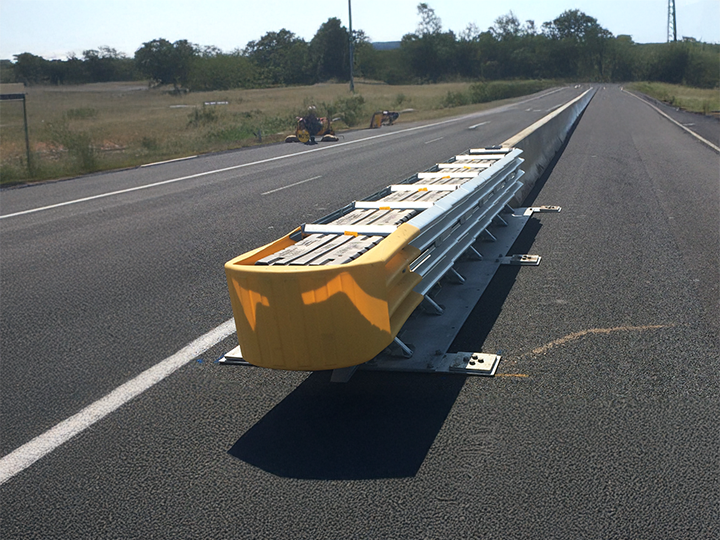
-
What is a crash cushion?View
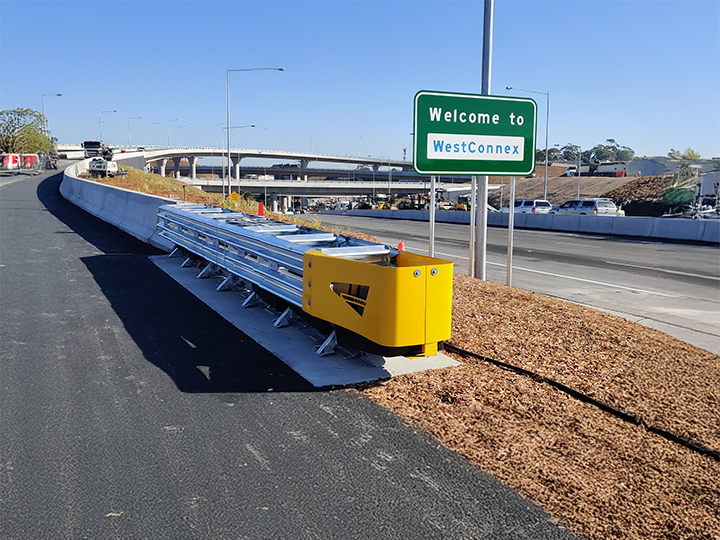
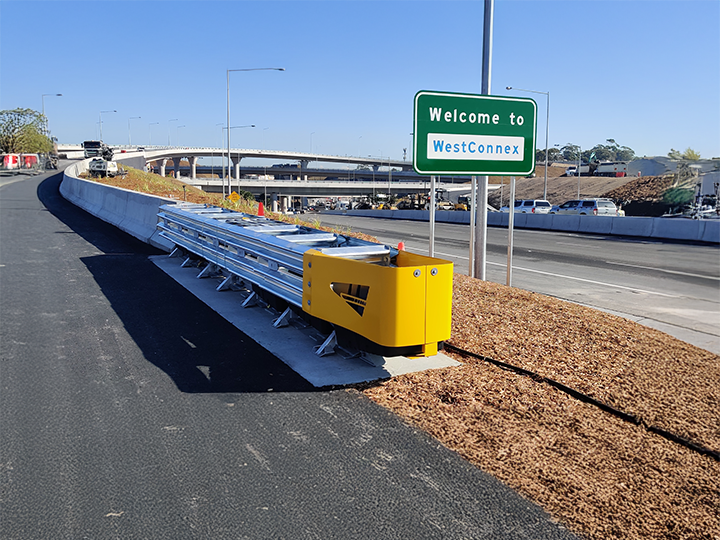
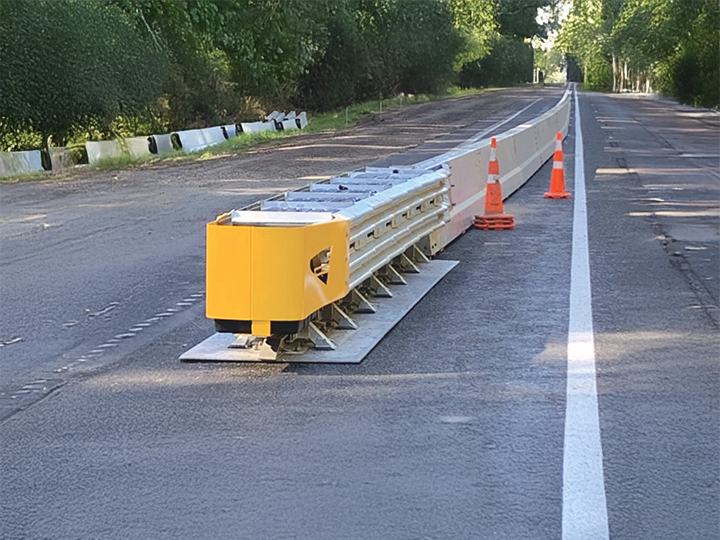
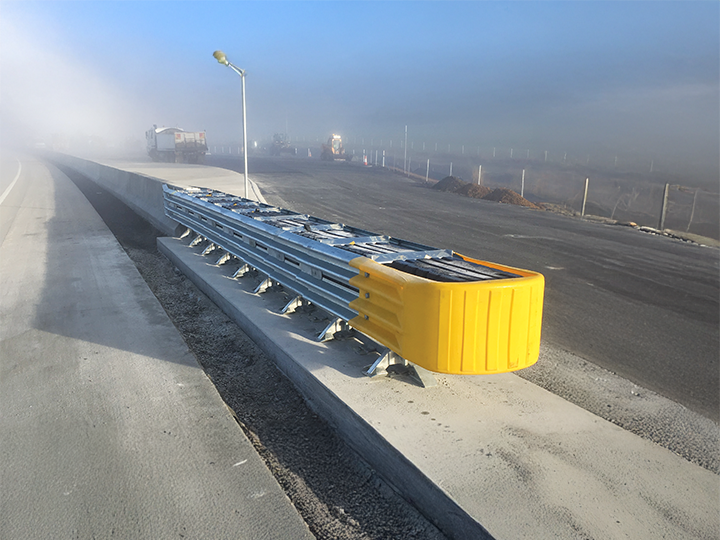
An impact attenuation device positioned in front of a fixed hazard, purpose built to absorb a vehicle's kinetic energy on a head on hit and bring it to a controlled stop, or redirect it back onto its path on a side impact.
-
What is a Quadguard crash cushion?View
Quadguard is a widely used crash cushion system that uses cartridges to absorb impact energy, designed to protect against both head on and side impacts at fixed hazards.
-
What are the types of crash cushions?View
Crash cushions are generally split into gating and non gating. A non gating system, like Quadguard M10 and Quadguard Elite M10, protects the hazard from all impact angles including from the side, so it doesn't allow the vehicle to pass through under any impact condition. The M10 Wide variant extends that same protection to hazards up to 1,755mm wide. ArmorBuffa is a gating option, allowing controlled penetration on a head on hit, suited to temporary work zone use.
-
How do crash cushions work?View
Energy is dissipated primarily through the crushing of cartridges in a head on event. On a head on impact, the system telescopes rearward, with each cartridge crushing sequentially to decelerate the vehicle within MASH occupant risk limits. For side impacts, the fender panel and cartridge assembly acts as a redirective surface, transferring lateral load into the system structure rather than allowing snagging or vaulting.
-
Where are crash cushions typically used?View
Crash cushions are typically installed in front of fixed hazards such as bridge piers, gore points, overhead sign supports, and other roadside structures that cannot be relocated or shielded another way.
-
Are crash cushions reusable after an impact?View
Depends on the system and the severity of the hit. Quadguard uses replaceable cartridges, so damaged bays can generally be swapped out rather than replacing the whole unit. Some systems, like Quadguard Elite, are potentially self-restoring after certain impacts.
